
Special Economic Zones (SEZs) in India: Benefits, Policy & Guide
Comprehensive Guide to Special Economic Zones (SEZs) in India: Benefits, Policies & Business Opportunities
India’s economic growth is driven by exports, global trade, foreign investments, and industrial development. One of the most successful initiatives supporting this growth is the Special Economic Zone (SEZ) framework.
Special Economic Zones (SEZs) are specially designated areas that provide businesses with tax incentives, customs benefits, simplified regulations, and world-class infrastructure to promote export-oriented growth. Governed under the Special Economic Zones Act, 2005, SEZs have become an important part of India’s strategy to attract domestic and foreign investments while improving global competitiveness.
Whether you’re an entrepreneur, exporter, manufacturer, IT company, or multinational business planning to establish operations in India, understanding how SEZs work can help you maximize business opportunities and remain compliant with regulatory requirements.
What is a Special Economic Zone (SEZ)?
A Special Economic Zone (SEZ) is a geographically designated area within a country where businesses receive special regulatory, tax, and customs benefits to encourage exports, attract investment, and generate employment.
Unlike businesses operating in the Domestic Tariff Area (DTA), companies located in SEZs enjoy a business-friendly ecosystem with simplified procedures, duty exemptions, improved infrastructure, and faster approvals, enabling them to focus on global markets.
In India, SEZs operate under the Special Economic Zones Act, 2005, which provides the legal framework for the establishment, development, operation, and management of SEZs.
Why Were Special Economic Zones Introduced in India?
Before the SEZ Act was introduced, India operated Export Processing Zones (EPZs). While EPZs helped promote exports, they had limited flexibility and were less effective in attracting large-scale investments.
To create a globally competitive business environment, the Government of India introduced the Special Economic Zones Act, 2005, offering businesses a structured framework with improved incentives and simplified compliance.
The primary objectives of establishing SEZs include:
- Increasing exports from India.
- Attracting Foreign Direct Investment (FDI).
- Generating employment opportunities.
- Promoting industrial and infrastructure development.
- Encouraging regional economic growth.
- Strengthening India’s position in global trade.
Key Benefits of Setting Up a Business in an SEZ
Businesses operating within Special Economic Zones enjoy several advantages that help reduce operational costs and improve efficiency.
Tax Benefits
SEZ units may be eligible for various tax incentives and exemptions under applicable laws and government policies, helping businesses optimize their overall tax structure.
Customs Duty Benefits
Imports of raw materials, capital goods, and equipment required for authorized operations are generally eligible for customs-related benefits, subject to applicable regulations.
Simplified Regulatory Framework
SEZs offer a business-friendly regulatory environment with reduced procedural complexities, enabling companies to focus on business growth instead of administrative hurdles.
Single Window Clearance
Many regulatory approvals are coordinated through a single-window mechanism, reducing delays and improving ease of doing business.
World-Class Infrastructure
Most SEZs provide:
- Reliable power supply
- Modern industrial infrastructure
- Efficient transportation connectivity
- High-speed communication facilities
- Logistics support
Export-Oriented Ecosystem
Since SEZs are designed primarily to promote exports, businesses benefit from an ecosystem specifically developed for international trade.
How Do Special Economic Zones Operate?
Businesses establishing operations within an SEZ function under a dedicated regulatory framework designed to encourage exports and simplify compliance.
Key operational features include:
- Duty benefits for eligible imports.
- Simplified documentation and approvals.
- Compliance through designated authorities.
- Faster customs procedures.
- Export-focused business operations.
- Access to advanced infrastructure and logistics support.
This combination allows businesses to improve operational efficiency while remaining compliant with applicable SEZ regulations.
Major Special Economic Zones in India
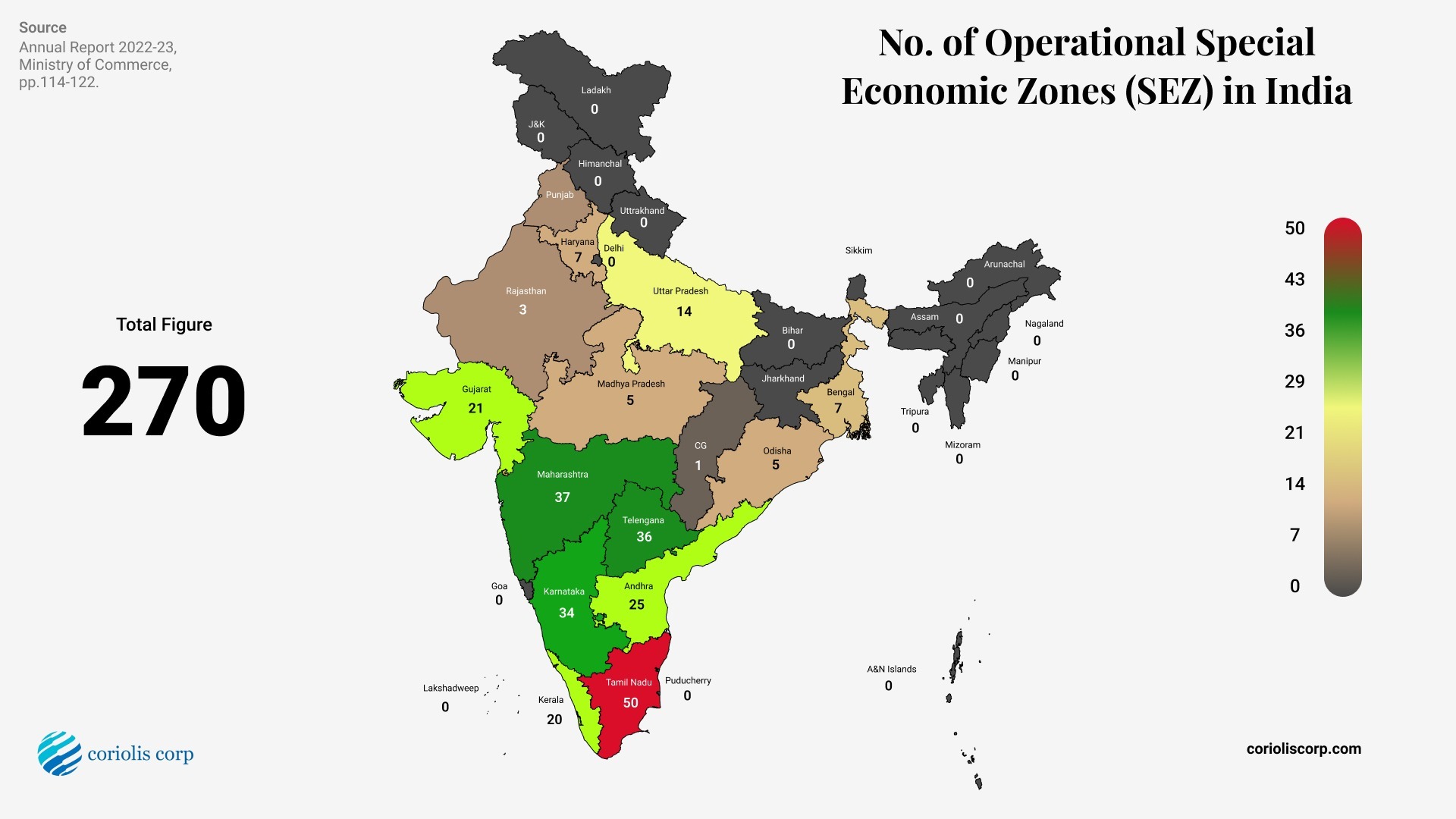
India has established numerous SEZs across different states to support various industries.
Some of the prominent SEZs include:
|
SEZ |
State |
Major Industry |
|
Kandla SEZ |
Gujarat |
Multi-product & Exports |
|
Mundra SEZ |
Gujarat |
Port-based Industries |
|
Noida SEZ |
Uttar Pradesh |
Electronics & IT |
|
Chennai SEZ |
Tamil Nadu |
Automobile & Electronics |
|
Infosys SEZ |
Karnataka |
IT & Software Services |
|
SEEPZ |
Maharashtra |
Gems, Jewellery & Electronics |
|
Cochin SEZ |
Kerala |
Multi-product Industries |
|
Visakhapatnam SEZ |
Andhra Pradesh |
IT & Manufacturing |
|
Surat SEZ |
Gujarat |
Diamond & Textile |
|
Mahindra World City SEZ |
Tamil Nadu |
IT, Apparel & Auto |
|
Moradabad SEZ |
Uttar Pradesh |
Handicrafts |
Who Can Benefit from SEZs?
Special Economic Zones support businesses across multiple industries, including:
- IT & ITES Companies
- Software Exporters
- Manufacturers
- Pharmaceutical Companies
- Engineering Industries
- Electronics Manufacturers
- Textile Exporters
- Logistics Companies
- Export-Oriented Units (EOUs)
- Multinational Corporations
Challenges Faced by SEZs
Although SEZs have contributed significantly to India’s export growth, businesses may still face certain challenges, including:
- Evolving regulatory requirements.
- Policy changes.
- Infrastructure variations across locations.
- Skilled workforce availability.
- Environmental and sustainability considerations.
- Global market competition.
Addressing these challenges requires strategic planning and ongoing compliance management.
The Future of SEZs in India
As India continues to strengthen its position as a global manufacturing and export hub, Special Economic Zones are expected to play an even greater role in economic development.
Future growth will depend on:
- Stable and transparent policies.
- Sustainable industrial development.
- Digital compliance processes.
- Skilled workforce development.
- Greater collaboration between domestic and international businesses.
With continuous policy improvements and infrastructure development, SEZs are expected to remain one of India’s most important engines of export-led growth.
How Coriolis Corp Can Help
Setting up and operating within a Special Economic Zone involves approvals, documentation, customs procedures, tax planning, regulatory compliance, and ongoing reporting.
As experienced SEZ consultants, Coriolis Corp provides end-to-end advisory services for developers, co-developers, and SEZ units across India. Our team assists businesses with SEZ setup, approvals, documentation, compliance management, customs advisory, and regulatory support, helping organizations maximize available benefits while maintaining compliance with applicable regulations.
Whether you’re planning to establish a new SEZ unit or manage ongoing compliance, our specialists provide practical, business-focused solutions tailored to your operational requirements.
Frequently Asked Questions (FAQs)
Q 1. What is a Special Economic Zone (SEZ)?
A Special Economic Zone (SEZ) is a designated area where businesses receive tax, customs, and regulatory benefits to promote exports, investment, and industrial growth.
Q 2. Which law governs SEZs in India?
SEZs in India are governed by the Special Economic Zones Act, 2005, along with applicable rules and notifications.
Q 3. What are the main benefits of operating in an SEZ?
Businesses may benefit from simplified compliance, customs-related incentives, improved infrastructure, faster approvals, and an export-oriented ecosystem.
Q 4. Who can establish a business in an SEZ?
Manufacturers, exporters, IT companies, pharmaceutical businesses, engineering firms, logistics providers, and multinational corporations can establish eligible operations in SEZs, subject to regulatory approvals.
Q 5. Why should businesses seek SEZ consulting services?
Professional SEZ consultants help businesses navigate approvals, documentation, customs procedures, compliance requirements, and ongoing regulatory obligations, reducing operational risks and improving efficiency.
Explore Our Compliance & Advisory Services
Need expert assistance with SEZ compliance, taxation, customs, or regulatory approvals? Explore our comprehensive business compliance services:
Indirect Tax Services | Direct Tax Services | Certification Services | Custom Clearance & Freight Forwarding Services | GCC Services | GST Services